
Have you ever wondered how ChatGPT reads your question and writes back a clear, useful reply? If so, you are not alone. The answer lies in a type of AI system called a large language model. AI School Nigeria trains Nigerians to work with and alongside these tools. So, this guide explains what large language models are, how they learn, and why every professional in Nigeria needs to understand them in 2026.
This article also covers the main types of LLMs in use today, what they can and cannot do, and how AI School Nigeria uses this knowledge in its training courses. By the end, you will have a clear picture of one of the most important technologies shaping work and careers right now.
What Is a Large Language Model?
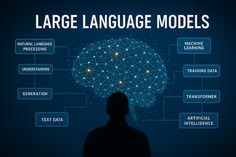
A large language model is a type of AI system trained to read, write, and talk using human language. It learns by processing huge amounts of textbooks, websites, articles, and more. From that text, it builds a deep map of how words, sentences, and ideas connect.
However, an LLM does not understand language the way a human does. Instead, it predicts what word or phrase is most likely to come next, based on the patterns it learned during training. This prediction process is what makes LLMs so useful for tasks like answering questions, writing emails, and summarising long documents.
Furthermore, the word “large” matters here. These models have billions of settings called parameters that are adjusted during training. More parameters generally mean the model can handle more complex language tasks. ChatGPT, Gemini, and Claude are all built on large language models.
How Does an LLM Learn?
The Training Process
Training an LLM happens in two main stages. First, the model reads a massive dataset of text and learns to predict the next word in a sequence. This stage is called pre-training. It takes enormous computing power and can run for weeks or months.
Second, the model goes through a fine-tuning stage. Specifically, human trainers give feedback on the model’s outputs. The model learns from that feedback and improves at giving helpful, accurate, and safe replies. As a result, the finished model is far more useful than one that has only gone through pre-training.
What Are Tokens?
LLMs do not read words the way humans do. Instead, they break text into small pieces called tokens. A token is roughly a word or part of a word. For example, the word “training” might become two tokens: “train” and “ing”. The model processes these tokens one by one to build its response.
Also, every LLM has a context window, the number of tokens it can hold in memory at one time. A larger context window means the model can read and respond to longer inputs. This matters for tasks like summarising a long report or holding a long conversation.
The Transformer Architecture
Most modern LLMs are built on a design called the transformer. This design was introduced in 2017 and changed the AI field completely. The key idea in the transformer is a mechanism called attention. It lets the model focus on the most relevant parts of a text when forming its response.
For instance, if you ask, “What did the report say about sales in Lagos?” the attention mechanism helps the model focus on the parts of the text that mention sales and Lagos, not the rest. Consequently, transformer-based LLMs are far better at handling long, complex inputs than earlier AI systems were.
Furthermore, transformers are why LLMs scale so well. Adding more data and more computing power to a transformer model tends to make it smarter in a predictable way. This property is a big reason why investment in LLMs has grown so fast.
What Can LLMs Do?
LLMs are useful for a wide range of tasks. Here are the most common ones in professional settings:
- Writing and editing: drafting emails, reports, proposals, and social posts.
Beyond writing, LLMs also handle research and analytical work:
- Summarising long documents: cutting a report down to its key points quickly.
They also handle language and technical tasks across formats:
- Answering questions: drawing on their training data to give useful replies.
Language conversion and code generation are also strong use cases:
- Translating: converting text between languages with high accuracy.
- Writing code: producing working code in Python, SQL, and other languages.
Also, LLMs are now being built into tools Nigerians use every day: search engines, email apps, customer service bots, and document editors. Understanding how they work helps you use these tools more effectively and spot their limits.
What LLMs Cannot Do
LLMs are powerful, but they have real limits. First, they can produce wrong answers that sound completely confident. This is called hallucination. The model does not know the difference between a fact and a plausible-sounding guess.
Second, LLMs do not have real-time knowledge unless they are connected to the internet. Their training data has a cut-off date. Therefore, asking an LLM about a recent news event may get you an outdated or invented answer.
In addition, LLMs have no true understanding of cause and effect. They find patterns in text; they do not reason the way humans do. So, complex problems that need genuine logical thinking can still trip them up. Knowing these limits is as important as knowing what LLMs can do well.
Types of LLMs in Use Today
Several major LLMs are now in wide use across Nigeria and the world. ChatGPT, built by OpenAI, is the most widely known. Gemini, from Google, is built into many Google tools. Claude, from Anthropic, is known for longer context and careful responses.
Moreover, open-source LLMs like Meta’s Llama models are available for organisations to run on their own systems. This matters for Nigerian businesses that need control over their data. As a result, the LLM landscape is now broad enough that different tools suit different jobs.
Why LLMs Matter for Nigerian Professionals
Nigeria’s economy is moving fast. Banking, telecoms, public sector, and logistics firms are all exploring AI tools. LLMs sit at the centre of this shift. Professionals who understand how these systems work can use them as real productivity tools, not just novelties.
Furthermore, LLM-based tools are changing how data is queried, how reports are drafted, and how customer queries are handled. Nigerian workers who can use these tools well and who can spot when the output is wrong have a clear edge in the job market.
In short, understanding large language models is no longer optional for professionals who want to stay relevant in 2026 and beyond.
Free Resource: How LLMs Work
For a clear technical overview of large language models, see What Are Large Language Models (LLMs)? | IBM covers the core ideas, the transformer architecture, and how these systems are trained. It is a solid reference for anyone who wants to go deeper after reading this guide.
How AI School Nigeria Teaches LLMs
AI School Nigeria’s AI courses are built to make these concepts practical for Nigerian professionals. Also, the school teaches LLMs in the context of real tools: ChatGPT, Gemini, and Claude. So students learn how to use them, not just what they are. Furthermore, every module connects AI concepts to real Nigerian business settings.
In addition, AI School Nigeria covers the limits of LLMs alongside their strengths. Students learn to spot hallucinations, check outputs, and work with AI tools in a way that is safe and effective. As a result, graduates leave with a clear, grounded understanding of AI, not just surface-level familiarity.
To learn more about AI training at AI School Nigeria, visit the AI School Nigeria courses page. You will find course details, entry requirements, and how to register.
To see the quality of work that AI School Nigeria students produce, visit https://aischoolnigeria.com/portfolio/generative-ai-with-chatgpt/. These are real projects from real students.
Frequently Asked Questions: Large Language Models
Q1: Do I Need a Technical Background to Understand LLMs?
No technical background is needed to understand how LLMs work at the level this article covers. Also, AI School Nigeria teaches these ideas in plain language designed for professionals from any background. Furthermore, the school connects every concept to tools and tasks students already use. In short, curiosity and an interest in AI are the only entry needs.
Q2: Are LLMs the Same as AI?
No. LLMs are one type of AI specifically, a type built for language tasks. Also, AI covers a much wider range of systems, from image recognition to self-driving cars to fraud detection. Furthermore, not all language AI systems are large language models. In short, LLMs are a powerful and widely used branch of AI, but they are not the whole field.
Q3: How Can I Start Using LLMs in My Work?
The easiest starting point is a tool like ChatGPT or Gemini, which are free to access. Also, begin with tasks you already do, such as drafting emails, summarising documents, or writing reports. Furthermore, AI School Nigeria’s AI courses show exactly how to use these tools for common Nigerian professional tasks. In short, the best way to learn LLMs is to use them with clear guidance on their limits.
Start Understanding AI: Begin With LLMs
Ultimately, large language models are the technology driving the AI tools that are reshaping work in Nigeria right now. Understanding how they learn, what they can do, and where they fail is the first step to using them well. Every professional who builds this knowledge gains a real, lasting advantage.
To that end, take your next step today. Visit the Artificial Intelligence School in Nigeria. – Home and explore how AI School Nigeria can build your AI skills from the ground up. As a result, you will be ready to work with these tools, not just watch them change the world around you.