
• Tel: 0701 002 6990
  • info@aischoolnigeria.com
  • Lagos Office: No. 12, Abiodun Shobajo Street, Agidingbi, Ikeja, Lagos State.

Category Archives: News Updates

ChatGPT

ChatGPT for Productivity: A Complete 2026 Guide

Do you spend too much of your workday on repetitive tasks like drafting emails, writing reports, or searching for answers? ChatGPT can help. AI School Nigeria teaches Nigerian professionals how to use AI tools to work smarter. This guide covers practical ways to use ChatGPT for everyday productivity, tailored to Nigerian work settings.
This article also covers how to write prompts that deliver results, which tasks ChatGPT handles best, and what to watch out for at work. By the end, you will have a clear, practical picture of how ChatGPT can save you real time every day.

Why Everyday Productivity Matters

Nigerian professionals are busy. Many handle multiple roles, tight deadlines, and reporting across teams or clients. Also, a large share of that time goes on writing tasks: emails, meeting notes, proposals, and standard forms.
These tasks do not need deep expertise. However, they do take time. Furthermore, when they pile up, they push out higher-value work: the analysis, planning, and decision-making that actually move things forward. ChatGPT is built for exactly this gap. It handles the routine writing and research load so you can focus on the work that needs your judgement.

ChatGPT Productivity

What ChatGPT Can Do for You Every Day

Writing and Drafting

The most common use of ChatGPT at work is drafting text. You give it a brief description of what you need, and it produces a first draft in seconds. This works for emails, reports, proposals, meeting agendas, and social media posts.
For example, instead of staring at a blank page, you type: “Write a polite follow-up email to a client who has not responded in two weeks.” ChatGPT gives you a draft you can edit and send in two minutes. Also, you can ask it to adjust the tone to be more formal, shorter, or with a specific detail added. Consequently, drafting tasks that used to take an hour can take ten minutes.

Summarising Long Documents

Many Nigerian professionals receive long reports, policy documents, or email threads that take significant time to read in full. ChatGPT can summarise these quickly. You paste the text and ask for the key points, the main decisions, or a one-paragraph overview.
Furthermore, you can ask specific questions: “What deadlines are mentioned?” or “What action is required from my team?” As a result, you get what you need without reading every line. This is one of the fastest productivity gains ChatGPT offers.

Answering Questions and Explaining Concepts

When you need to understand something quickly, a regulation, a financial term, or a technical concept, ChatGPT gives clear explanations in plain language. Also, you can set the level: “Explain this for someone with no finance background” or “Give me a technical breakdown.”
However, always verify facts that will be used in decisions or shared with others. ChatGPT can produce confident-sounding wrong answers, especially on specific facts, recent events, or data. In short, use it to understand concepts and get a starting point, not as a final source for critical facts.

Formatting and Structuring Content

ChatGPT is strong at taking raw notes or ideas and turning them into a clear structure. You can give it bullet points and ask for a full report or hand it a rough draft and ask it to reorganise the sections. Also, a data table pasted in can become a plain-language summary of what the numbers show.
Furthermore, ChatGPT can convert between formats. A long email thread becomes a meeting summary, and a full report can yield a short presentation outline. In short, it handles the formatting work that takes time but does not require deep knowledge.

How to Write Prompts That Get Good Results

The quality of ChatGPT’s output depends heavily on the quality of your prompt. A vague prompt gives a vague result, while a clear and specific one produces something much more useful.
Here are the key things to include in a strong prompt:
  • State the task clearly: “Write”, “Summarise”, “Explain”, “List”, “Draft”.
Then add context to sharpen the result:
  • Give context: who it is for, what tone is needed, and how long it should be.
  • Give an example if you have one: “Write it in the style of this paragraph…”
  • Specify the format: “Give me five bullet points”, “Write three short paragraphs”.
Also, if the first result is not quite right, ask ChatGPT to adjust it rather than starting over. For instance: “Make it shorter” or “Use a more formal tone.” Consequently, you get to a useful result faster than rewriting the whole prompt.

Tasks ChatGPT Is Not Right For

ChatGPT is a powerful tool, but it is not right for everything. First, it should not be used as a source for facts, statistics, or data without checking. The model can hallucinate, producing plausible but incorrect information.
Second, sensitive or confidential information should not be pasted into ChatGPT. Your prompt and the content you share may be used to improve the model. Therefore, avoid pasting personal data, client information, or internal financial figures into a public AI tool.
In addition, ChatGPT does not have access to your organisation’s internal data or real-time information. It cannot check your emails, access your files, or look up live prices unless specific tools are connected to it. Knowing these limits helps you use it safely and effectively.

ChatGPT in Nigerian Work Settings

Nigerian professionals face some specific contexts where ChatGPT adds clear value. Writing in formal English is a requirement in many roles, but for some workers it takes significant time. ChatGPT can draft formally phrased content quickly, which saves time and reduces the pressure around formal writing.
Also, many Nigerian businesses communicate with clients in multiple formats: formal letters, WhatsApp messages, email threads, and presentations. ChatGPT can draft across all of these and adjust the tone for each. Furthermore, it handles Nigerian English naturally and can produce content that fits local professional norms when asked.
In short, the productivity gains from ChatGPT are just as real for Nigerian professionals. The tool is free at the basic level, so access is easy.

Free Resource: Getting Started with ChatGPT

For a practical, plain-language introduction to using ChatGPT effectively, OpenAI’s official help centre covers how to get started, how to write prompts, and how to use ChatGPT’s main features. It is the best first reference for anyone new to the tool.

How AI School Nigeria Teaches Practical AI Use

AI School Nigeria’s AI courses are built around practical use, not just theory. Also, students learn to use ChatGPT and other AI tools for the specific tasks they face in Nigerian professional settings. Furthermore, every module includes hands-on practice with real prompts and real outputs, so students leave with working skills, not just knowledge.
In addition, AI School Nigeria covers responsible AI use, what not to share, and how to check outputs. As a result, graduates are confident, effective, and safe users of AI.
To explore AI productivity training at AI School Nigeria, visit https://aischoolnigeria.com/. You will find course details, entry requirements, and how to join.

Frequently Asked Questions: ChatGPT for Productivity

Q1: Is ChatGPT Free to Use?

Yes, ChatGPT has a free tier that covers most everyday productivity tasks. Also, a paid plan adds faster responses, access to newer models, and extra features like image generation. Furthermore, for most Nigerian professionals starting, the free tier is more than enough to see real productivity gains. In short, there is no cost barrier to getting started with ChatGPT.

Q2: Will Using ChatGPT at Work Get Me in Trouble?

This depends on your organisation’s policy. Also, some firms have rules about which AI tools can be used with work data. Furthermore, sharing sensitive or confidential information with any external tool, AI or otherwise, is generally against most organisational data policies. In short, check your employer’s guidelines and avoid pasting private data into any public AI tool.

Q3: How Long Does It Take to Get Good at Using ChatGPT?

Basic productivity use can be picked up in a day or two of practice. Also, the key skill is writing clear prompts, which improves quickly with use. Furthermore, AI School Nigeria’s AI courses build prompt-writing skills in a structured way, so students improve faster than self-study alone allows. In short, meaningful productivity gains are available within the first week of use.

Start Saving Time Today: Use ChatGPT the Right Way

Ultimately, ChatGPT is one of the most accessible and practical AI tools available to Nigerian professionals right now. Used well, it can save hours every week on writing, summarising, and research tasks. The key is knowing how to prompt it, what it is good at, and where to check its output.
To that end, take your next step today. Visit https://aischoolnigeria.com/ and discover how AI School Nigeria’s practical AI training can help you use ChatGPT with real skill and confidence. As a result, you will work smarter starting from your very next working day.
Generative AI

What Generative AI Really Creates: A Complete Guide

Have you ever asked ChatGPT to write a report and been surprised by how good the result was? Or seen an AI-generated image that looked like a real photograph? If so, you have already seen generative AI at work. AI School Nigeria teaches Nigerians how these tools work, not just how to use them. So, this guide explains exactly how generative AI creates text, images, audio, and video, and what that means for professionals in Nigeria in 2026.

In addition, this article covers the different AI systems behind each type of content, what makes each one work, and where the limits are. As a result, you will have a clear, grounded understanding of generative AI, the kind that helps you use these tools with confidence.

Generative AI

What Is Generative AI?

Generative AI is a type of artificial intelligence that creates new content rather than just classifying or analysing what already exists. It can write text, produce images, generate audio, and create video. The content it produces is new, not copied from its training data.

However, generative AI does not create from nothing. It learns patterns from massive amounts of existing content. Then it uses those patterns to produce new outputs that match what it was asked for. The output feels original because the model combines patterns in novel ways, not because it has imagination in any human sense.

Furthermore, generative AI is now built into tools Nigerians use every day, from email drafting tools to design platforms to customer service bots. Understanding how it works helps you use these tools better and spot when the output needs checking.

How Generative AI Creates Text

The Role of Large Language Models

Large language models, or LLMs, drive text generation. These models learn from billions of pages of text and build a detailed map of how words and ideas connect. When you give an LLM a prompt, it predicts the most likely sequence of words that fits your request.

Specifically, the model does not write the way a human does. It calculates the probability of which word is most likely to follow the last one, based on its training. Because the training data is so large and varied, the output can be remarkably fluent and useful. Also, fine-tuning by human trainers makes the output far more helpful and safe than raw prediction alone would be.

What Text Generation Is Good At

LLM-based text tools are strong at drafting, summarising, translating, and answering questions. They handle structured formats well: reports, emails, lists, and code. Furthermore, they can match a tone or style when asked, making them useful for content work at scale.

However, text generation has real limits. The model can produce wrong facts in a confident tone, a problem called hallucination. Therefore, a human must review any AI-generated text before sharing or acting on it. This is a key lesson in every AI School Nigeria course.

How Generative AI Creates Images

Diffusion Models and GANs

Image generation uses different AI systems from text generation. The two most common are diffusion models and generative adversarial networks, or GANs. Tools like DALL-E, Midjourney, and Stable Diffusion use diffusion models. These start with random noise and gradually shape it into a clear image, guided by the text prompt you give them.

GANs work differently. Two AI systems compete: one generates images, the other judges whether they look real. Over time, the generator gets better at producing images the judge cannot reject. As a result, GAN-generated images can be extremely realistic.

What Image Generation Is Good At

AI image tools are strong at producing concept art, product mockups, social media visuals, and presentation graphics quickly and at low cost. Also, they can generate realistic photos of scenes, objects, and people that do not exist. Furthermore, they can edit existing images, removing objects, changing backgrounds, or altering styles.

The limits are real too. AI image tools can produce visual errors, odd hands, strange text, or faces that look slightly off. In addition, copyright and originality questions remain unresolved across the industry. Knowing these limits helps you use image tools responsibly.

How Generative AI Creates Audio

Audio generation covers two main areas: voice synthesis and music generation. Voice synthesis tools can produce natural-sounding speech from text. Systems like ElevenLabs and Google’s text-to-speech tools can clone a voice or create a new one that sounds human.

Music generation tools like Suno and Udio produce full songs from a short text description. Their training covered huge libraries of recorded music, so they match genres, tempos, and moods with ease. Consequently, producing background music, podcasts, or audio ads is now something small teams can do without a studio.

Moreover, audio generation is already changing how Nigerian content creators and businesses produce media. Understanding the tools available and the ethical questions they raise around voice cloning and music rights is increasingly important.

How Generative AI Creates Video

Video generation is the newest and fastest-moving area of generative AI. Tools like OpenAI’s Sora can produce short video clips from a text description. They do this by extending image generation across time, predicting not just what a frame looks like, but how it changes from one moment to the next.

Also, AI video tools can now animate still images, dub existing video into other languages, and generate realistic talking-head videos from a photo and an audio file. Furthermore, video editing tools now use AI to cut footage, add captions, and adjust pacing automatically.

In short, generative AI is making video production faster and cheaper. Nigerian businesses that understand these tools can produce marketing content, training materials, and explainer videos at a fraction of the previous cost.

What All Four Have in Common

Text, image, audio, and video generation all share a common pattern. Every system is trained on large amounts of existing content. From that content, it learns the underlying patterns. It then uses those patterns to produce new outputs that match a given prompt.

Furthermore, all four types of generative AI improve with scale; more training data and more computing power tend to produce better outputs. This is why the tools available in 2026 are dramatically more capable than those from just two years ago. As a result, the pace of change in this field is one of the most important things any Nigerian professional needs to track.

Free Resource: What Is Generative AI?

For a clear and complete overview of generative AI, https://ibm.github.io/AI-IBMi-guide/journeys/genai/ covers the core concepts, the main types of models, and how they are being applied across industries. It is a useful reference for anyone who wants to go deeper into this fast-moving field.

How AI School Nigeria Teaches Generative AI

AI School Nigeria‘s AI courses cover generative AI in a practical, hands-on way. Also, students learn to use text, image, and audio tools for real Nigerian business tasks, not just in theory. Furthermore, every module covers both the strengths and limits of each tool, so graduates can use generative AI responsibly and effectively.

In addition, AI School Nigeria keeps its courses current with the fast pace of change in this field. When a major new tool or technique gains wide adoption, AI School Nigeria adds it to the curriculum. As a result, students always learn what the market needs right now.

To explore AI training at AI School Nigeria, visit https://aischoolnigeria.com/. You will find course details, entry requirements, and how to register.

Frequently Asked Questions: Generative AI

Q1: Can Generative AI Replace Human Creators?

Not in any complete sense. Also, generative AI tools produce outputs based on patterns; they do not have judgment, lived experience, or genuine creative intent. Furthermore, the best results from AI tools come when a skilled human directs, edits, and refines the output. In short, generative AI is a powerful tool for creators, not a replacement for them.

Q2: Is Generative AI Content Always Accurate?

No. Text generation tools in particular can produce wrong information in a confident tone. Also, image tools can produce visual errors that are hard to spot at first glance. Furthermore, audio and video tools can be used to create misleading content. In short, all generative AI output should be checked before it is used or shared.

Q3: How Can I Learn to Use Generative AI Tools in Nigeria?

The most effective route is a structured course that covers the tools and their limits together. Also, AI School Nigeria’s AI courses are built for Nigerian professionals and cover the most widely used generative AI tools in a practical setting. Furthermore, hands-on project work means students leave with real experience, not just theory. In short, structured training is the fastest and most reliable route to genuine generative AI skill.

Understand Generative AI: Use It with Confidence

Ultimately, generative AI is reshaping how content is created across text, images, audio, and video. Professionals who understand how these systems work can use them as genuine productivity tools. Those who do not risk using them poorly or being left behind as the tools become standard across Nigerian industries.

To that end, take your next step today. Visit https://aischoolnigeria.com/ and discover how AI School Nigeria can build your practical AI skills. As a result, you will be ready to use generative AI tools with real confidence and clear judgement.

large-language-models

What Are Large Language Models? Full Explanation

Have you ever wondered how ChatGPT reads your question and writes back a clear, useful reply? If so, you are not alone. The answer lies in a type of AI system called a large language model. AI School Nigeria trains Nigerians to work with and alongside these tools. So, this guide explains what large language models are, how they learn, and why every professional in Nigeria needs to understand them in 2026.
This article also covers the main types of LLMs in use today, what they can and cannot do, and how AI School Nigeria uses this knowledge in its training courses. By the end, you will have a clear picture of one of the most important technologies shaping work and careers right now.
large language models explained

What Is a Large Language Model?

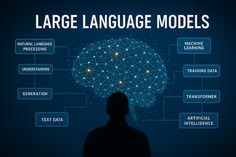
A large language model is a type of AI system trained to read, write, and talk using human language. It learns by processing huge amounts of textbooks, websites, articles, and more. From that text, it builds a deep map of how words, sentences, and ideas connect.
However, an LLM does not understand language the way a human does. Instead, it predicts what word or phrase is most likely to come next, based on the patterns it learned during training. This prediction process is what makes LLMs so useful for tasks like answering questions, writing emails, and summarising long documents.
Furthermore, the word “large” matters here. These models have billions of settings called parameters that are adjusted during training. More parameters generally mean the model can handle more complex language tasks. ChatGPT, Gemini, and Claude are all built on large language models.

How Does an LLM Learn?

The Training Process

Training an LLM happens in two main stages. First, the model reads a massive dataset of text and learns to predict the next word in a sequence. This stage is called pre-training. It takes enormous computing power and can run for weeks or months.
Second, the model goes through a fine-tuning stage. Specifically, human trainers give feedback on the model’s outputs. The model learns from that feedback and improves at giving helpful, accurate, and safe replies. As a result, the finished model is far more useful than one that has only gone through pre-training.

What Are Tokens?

LLMs do not read words the way humans do. Instead, they break text into small pieces called tokens. A token is roughly a word or part of a word. For example, the word “training” might become two tokens: “train” and “ing”. The model processes these tokens one by one to build its response.
Also, every LLM has a context window, the number of tokens it can hold in memory at one time. A larger context window means the model can read and respond to longer inputs. This matters for tasks like summarising a long report or holding a long conversation.

The Transformer Architecture

Most modern LLMs are built on a design called the transformer. This design was introduced in 2017 and changed the AI field completely. The key idea in the transformer is a mechanism called attention. It lets the model focus on the most relevant parts of a text when forming its response.
For instance, if you ask, “What did the report say about sales in Lagos?” the attention mechanism helps the model focus on the parts of the text that mention sales and Lagos, not the rest. Consequently, transformer-based LLMs are far better at handling long, complex inputs than earlier AI systems were.
Furthermore, transformers are why LLMs scale so well. Adding more data and more computing power to a transformer model tends to make it smarter in a predictable way. This property is a big reason why investment in LLMs has grown so fast.

What Can LLMs Do?

LLMs are useful for a wide range of tasks. Here are the most common ones in professional settings:
  • Writing and editing: drafting emails, reports, proposals, and social posts.
Beyond writing, LLMs also handle research and analytical work:
  • Summarising long documents: cutting a report down to its key points quickly.
They also handle language and technical tasks across formats:
  • Answering questions: drawing on their training data to give useful replies.
Language conversion and code generation are also strong use cases:
  • Translating: converting text between languages with high accuracy.
  • Writing code: producing working code in Python, SQL, and other languages.
Also, LLMs are now being built into tools Nigerians use every day: search engines, email apps, customer service bots, and document editors. Understanding how they work helps you use these tools more effectively and spot their limits.

What LLMs Cannot Do

LLMs are powerful, but they have real limits. First, they can produce wrong answers that sound completely confident. This is called hallucination. The model does not know the difference between a fact and a plausible-sounding guess.
Second, LLMs do not have real-time knowledge unless they are connected to the internet. Their training data has a cut-off date. Therefore, asking an LLM about a recent news event may get you an outdated or invented answer.
In addition, LLMs have no true understanding of cause and effect. They find patterns in text; they do not reason the way humans do. So, complex problems that need genuine logical thinking can still trip them up. Knowing these limits is as important as knowing what LLMs can do well.

Types of LLMs in Use Today

Several major LLMs are now in wide use across Nigeria and the world. ChatGPT, built by OpenAI, is the most widely known. Gemini, from Google, is built into many Google tools. Claude, from Anthropic, is known for longer context and careful responses.
Moreover, open-source LLMs like Meta’s Llama models are available for organisations to run on their own systems. This matters for Nigerian businesses that need control over their data. As a result, the LLM landscape is now broad enough that different tools suit different jobs.

Why LLMs Matter for Nigerian Professionals

Nigeria’s economy is moving fast. Banking, telecoms, public sector, and logistics firms are all exploring AI tools. LLMs sit at the centre of this shift. Professionals who understand how these systems work can use them as real productivity tools, not just novelties.
Furthermore, LLM-based tools are changing how data is queried, how reports are drafted, and how customer queries are handled. Nigerian workers who can use these tools well and who can spot when the output is wrong have a clear edge in the job market.
In short, understanding large language models is no longer optional for professionals who want to stay relevant in 2026 and beyond.

Free Resource: How LLMs Work

For a clear technical overview of large language models, see What Are Large Language Models (LLMs)? | IBM covers the core ideas, the transformer architecture, and how these systems are trained. It is a solid reference for anyone who wants to go deeper after reading this guide.

How AI School Nigeria Teaches LLMs

AI School Nigeria’s AI courses are built to make these concepts practical for Nigerian professionals. Also, the school teaches LLMs in the context of real tools: ChatGPT, Gemini, and Claude. So students learn how to use them, not just what they are. Furthermore, every module connects AI concepts to real Nigerian business settings.
In addition, AI School Nigeria covers the limits of LLMs alongside their strengths. Students learn to spot hallucinations, check outputs, and work with AI tools in a way that is safe and effective. As a result, graduates leave with a clear, grounded understanding of AI, not just surface-level familiarity.
To learn more about AI training at AI School Nigeria, visit the AI School Nigeria courses page. You will find course details, entry requirements, and how to register.
To see the quality of work that AI School Nigeria students produce, visit https://aischoolnigeria.com/portfolio/generative-ai-with-chatgpt/. These are real projects from real students.

Frequently Asked Questions: Large Language Models

Q1: Do I Need a Technical Background to Understand LLMs?

No technical background is needed to understand how LLMs work at the level this article covers. Also, AI School Nigeria teaches these ideas in plain language designed for professionals from any background. Furthermore, the school connects every concept to tools and tasks students already use. In short, curiosity and an interest in AI are the only entry needs.

Q2: Are LLMs the Same as AI?

No. LLMs are one type of AI specifically, a type built for language tasks. Also, AI covers a much wider range of systems, from image recognition to self-driving cars to fraud detection. Furthermore, not all language AI systems are large language models. In short, LLMs are a powerful and widely used branch of AI, but they are not the whole field.

Q3: How Can I Start Using LLMs in My Work?

The easiest starting point is a tool like ChatGPT or Gemini, which are free to access. Also, begin with tasks you already do, such as drafting emails, summarising documents, or writing reports. Furthermore, AI School Nigeria’s AI courses show exactly how to use these tools for common Nigerian professional tasks. In short, the best way to learn LLMs is to use them with clear guidance on their limits.

Start Understanding AI: Begin With LLMs

Ultimately, large language models are the technology driving the AI tools that are reshaping work in Nigeria right now. Understanding how they learn, what they can do, and where they fail is the first step to using them well. Every professional who builds this knowledge gains a real, lasting advantage.
To that end, take your next step today. Visit the Artificial Intelligence School in Nigeria. – Home and explore how AI School Nigeria can build your AI skills from the ground up. As a result, you will be ready to work with these tools, not just watch them change the world around you.
AI

Clear Advice on Artificial Intelligence Concepts and Career Paths

Are you interested in understanding how smart technologies transform modern industries and create high-paying job opportunities? If so, your search ends here. Abuja Data School is Nigeria’s top live technology training centre, empowering students and working professionals with in-demand digital skills. Artificial Intelligence (AI) has shifted from a theoretical computer science branch to the driving engine behind modern innovation. Furthermore, it powers everything from healthcare diagnostics and financial fraud detection to smart recommendation engines and autonomous systems.
This comprehensive guide introduces the fundamental concepts of AI, explores its real-world applications across Nigerian and global industries, and highlights lucrative career paths in 2026. In addition, it explains how structured, project-based learning at Abuja Data School helps you build hands-on experience and land competitive tech roles. As a result, by the end of this guide, you will have a clear understanding of the AI ecosystem and a concrete roadmap to launch your technical career.
AI

What Is Artificial Intelligence?

Artificial intelligence refers to the simulation of human intelligence in machines programmed to think, learn, reason, and solve complex problems. Instead of relying strictly on static, pre-written code, AI systems analyse massive datasets, detect subtle patterns, and make informed decisions with minimal human intervention.
To grasp the full scope of AI, it is helpful to categorise the technology into two main capabilities:
  • Narrow AI (Weak AI): These AI systems perform specific, dedicated tasks with high efficiency. Examples include virtual assistants like Siri, spam filters, face recognition algorithms, and recommendation systems on Netflix or Spotify. Almost all current AI applications operate within this category.
  • General AI (Strong AI): This represents a theoretical level of artificial intelligence where a system possesses human-like cognitive capabilities across all domains. While researchers continue exploring general AI, practical implementations remain focused on expanding narrow AI models.
Moreover, AI relies on a combination of algorithms, computational power, and quality data. As organisations in Nigeria and around the world generate increasing amounts of digital information, the demand for intelligent systems capable of extracting actionable insights continues to grow rapidly.

Core Concepts in Artificial Intelligence

To build a strong foundation in AI, you must understand the interconnected branches that power modern intelligent applications. Abuja Data School structures its curriculum around these core concepts to ensure students gain both theoretical clarity and practical skills.

1. Machine Learning (ML)

Machine learning is a subset of AI that enables systems to learn and improve automatically from data without explicit programming. Rather than following static rules, ML algorithms train on historical data to predict outcomes. ML algorithms fall into three primary types:
  • Supervised Learning: Models train on labelled datasets to map inputs to target outputs (e.g., predicting real estate prices or credit risk).
  • Unsupervised Learning: Models identify hidden patterns, clusters, or groupings in unlabelled data (e.g., customer segmentation in e-commerce).
  • Reinforcement Learning: Algorithms learn optimal actions through trial-and-error interactions with an environment to maximise rewards (e.g., robotics and game-playing agents).

2. Deep Learning and Neural Networks

Deep learning is an advanced subset of machine learning inspired by the structure and function of the human brain. It uses artificial neural networks with multiple layers (deep networks) to process complex data such as images, audio, and unstructured text. Furthermore, technologies like Convolutional Neural Networks (CNNs) for image recognition and Recurrent Neural Networks (RNNs) for sequential data power modern autonomous vehicles and medical imaging systems.

3. Natural Language Processing (NLP)

Natural Language Processing enables computers to understand, interpret, and generate human language. NLP bridges the gap between human communication and machine understanding. Applications range from language translation tools and sentiment analysis on social media to advanced large language models (LLMs) like ChatGPT, Claude, and Gemini.

4. Robotics and Computer Vision

Computer Vision equips machines to interpret visual information from digital images and real-time video streams. When combined with robotics, AI enables machines to navigate physical spaces, automate manufacturing pipelines, and perform surgical procedures with exceptional accuracy.

Practical Applications of AI Across Sectors

Artificial intelligence is no longer confined to academic research labs; it actively drives operational efficiency and profitability across various global and Nigerian industries.

Banking and Financial Services

Nigerian financial institutions utilise AI to safeguard transactions and streamline operations. Machine learning algorithms analyse transaction patterns in real time to flag fraudulent credit card activities immediately. Additionally, AI-powered credit scoring models help fintech platforms evaluate creditworthiness for underserved populations, while rule-based and conversational chatbots handle everyday customer service enquiries.

Healthcare and Medical Diagnostics

AI systems enhance diagnostic accuracy and speed up drug discovery pipelines. Deep learning algorithms scan medical images such as X-rays, MRIs, and CT scans to assist radiologists in detecting early-stage tumours and diseases. Moreover, predictive models analyse patient medical histories to assess risk factors for chronic conditions, improving preventative healthcare delivery.

E-Commerce and Digital Marketing

E-commerce giants and digital businesses leverage AI recommendation engines to boost sales and enhance user experience. By analysing browsing history, search intent, and past purchases, AI models recommend relevant products tailored to individual user preferences. In addition, dynamic pricing algorithms automatically adjust rates based on demand, market trends, and competitor activity.

Telecommunications and Customer Support

Telecommunication providers like MTN use AI algorithms for network traffic management and automated spam filtering. AI optimises bandwidth allocation during peak usage hours and detects network anomalies before service disruptions occur, ensuring seamless user connectivity.

High-Demand AI Career Paths in 2026

The rapid expansion of artificial intelligence has created a high demand for skilled technical professionals. Organisations across public and private sectors are actively recruiting individuals who can design, build, and maintain intelligent systems. Below are some of the most prominent career paths in the field:
Career Title
Core Responsibilities
Essential Tools & Technologies
Machine Learning Engineer
Designs, builds, and deploys scalable ML models into production environments. Python, sci kit-learn, Docker, FastAPI, SQL
Data Scientist
Analyses complex datasets to identify trends, build predictive models, and guide business strategies. Python, R, pandas, NumPy, SQL, Seaborn
AI Software Engineer
Integrates AI features and API frameworks into web, desktop, and mobile applications. Python, REST APIs, Git, Cloud Services (AWS/GCP)
NLP Specialist
Develops models for text parsing, sentiment analysis, speech recognition, and translation. Hugging Face Transformers, NLTK, PyTorch, SpaCy
AI Automation Specialist
Optimises business operations using no-code/low-code tools and AI agents. n8n, Zapier, Make.com, ChatGPT APIs

How to Get Started with AI: Learning Roadmap

Starting a career in artificial intelligence may seem overwhelming at first, but following a structured step-by-step roadmap makes the journey straightforward and achievable.
Step 1: Learn Mathematics & Programming Fundamentals (Python, SQL)
│
▼
Step 2: Master Data Analysis & Visualisation (pandas, NumPy, Matplotlib)
│
▼
Step 3: Build Core Machine Learning Models (Scikit-learn)
│
▼
Step 4: Specialise in Deep Learning, NLP, or AI Automation
│
▼
Step 5: Deploy Projects to Production & Build a Professional Portfolio

  1. Master Programming Fundamentals: Python is the industry-standard language for AI and data science due to its simplicity and extensive ecosystem of specialised libraries.
  2. Understand Mathematics and Statistics: A firm grasp of descriptive statistics, probability, linear algebra, and basic calculus provides the mathematical foundation necessary for tuning algorithms.
  3. Learn Data Handling and Trivialisation: Master libraries such as pandas and NumPy to clean and transform datasets, along with Seaborn and Matplotlib for exploratory data analysis.
  4. Build Machine Learning Models: Gain hands-on experience implementing linear regression, decision trees, random forests, and clustering techniques using scikit-learn.
  5. Deploy AI Solutions: Learn containerisation tools like Docker and API creation with FastAPI to deploy trained models into live production environments.

Recommended Learning Resource

In addition to formal live classes, candidates seeking to strengthen their theoretical background in foundational mathematics and computing principles can explore the Stanford University Artificial Intelligence Professional Program. This external programme provides valuable academic insights into algorithmic design and theoretical framework development. Combining self-paced academic material with practical, hands-on coding environments accelerates your mastery of complex concepts.

Why Study Artificial Intelligence at Abuja Data School?

Abuja Data School stands out as a leading technology institution dedicated to bridging the digital skills gap. The school provides patient, practical, instructor-led training tailored specifically for beginners, career changers, and experienced professionals looking to upskill.
Key advantages of enrolling at Abuja Data School include:
  • Live, Project-Based Instruction: Classes are conducted live with expert instructors who guide you step-by-step through real-world datasets and real coding exercises.
  • Zero Coding Prerequisites for Beginner Tracks: Courses such as AI Prompt Engineering and AI Tools for Work allow non-technical learners to harness modern AI automation tools without writing code.
  • Comprehensive AI & Data Track: Technical modules cover Python programming, SQL databases, scikit-learn machine learning, deep learning with TensorFlow, and model deployment.
  • Portfolio Building and Career Mentorship: Students complete practical capstone projects, build public GitHub repositories, polish their LinkedIn profiles, and receive hands-on internship placement guidance.

Frequently Asked Questions (FAQs)

Do I need a computer science degree to start a career in AI?

No, a formal computer science degree is not strictly required. Employers prioritise practical problem-solving capabilities, strong coding fundamentals, and a visible portfolio of completed projects on platforms like GitHub.

Which programming language should I learn first for AI?

Python is universally recommended as the best starting language for AI and machine learning. Its clean syntax and extensive library ecosystem, including pandas, NumPy, and scikit-learn, make it ideal for beginners and senior engineers alike.

How does Abuja Data School support absolute beginners?

Abuja Data School offers dedicated foundational courses that start entirely from scratch. Instructors break down complex technical topics into intuitive, easy-to-understand concepts, ensuring no student is left behind.

Take Your Next Step in Tech Today

Artificial intelligence is reshaping the future of work and creating unprecedented opportunities for skilled talent. Whether you want to automate routine business tasks, analyse complex organisational data, or build autonomous deep learning applications, gaining hands-on AI expertise is your best investment for long-term career growth.
To launch your tech journey, visit the https://www.abujadataschool.com/portfolio/ai-in-data-science/ on the website today to explore upcoming cohorts, review full course outlines, and enrol in live AI training.
Emmanuel Otori Lagos Data School

Lagos Data School Launches To Train Professionals in Data Science

Lagos Data School; an organization that provides human capacity training in data science for professionals has recently launched its operations in Ikeja, Lagos Nigeria.

Speaking at the launch ceremony, the Chief Executive Officer, Emmanuel Otori mentioned that the need for data in decision making helps to limit waste, reduce assumptions and take accurate measures of associated risk.

Data professionals are one of the highest paid career paths in the world today and having served organizations in training and consulting such as the Nigerian National Petroleum Corporation (NNPC), The Royal Norwegian Embassy, Greenville, FCT Service Commission, The Federal Capital Territory Authority (FCTA), Lagos Data School is poised to deliver top-notch experiential insights into how to adopt the tools to explore the field of data analysis and as well get insights from data to drive fact driven decisions.

Lagos Data School has its Ikeja office at No. 10, Bisi Agabi Street, Balogun Bus-stop, Opposite side of Lagoon hospital, Off Obafemi Awolowo Way, Allen Bus-stop, Ikeja, Lagos State.

The Chief Executive mentioned that the conducive learning environment and seasoned instructs coach learners to acquaint themselves with the most recent knowledge in utilizing data for key business decision making.

The learning institute is now open to begin to receive students on a continuous basis as sessions are personalized and one-on-one with instructors. Sessions are project based, physical and optimum for professionals considering pivoting into tech.

Following the success Abuja Data School, the guarantee of Lagos Data School to deliver value to its learners and clientele is unarguably the best among technological institutes.

Hi, How Can We Help You?
Welcome To
AI School Nigeria

Artificial Intelligence (AI), Machine Learning and Robotics Programmes Are Now Available!!!

Enroll Now!

Thank You
100% secure website.